
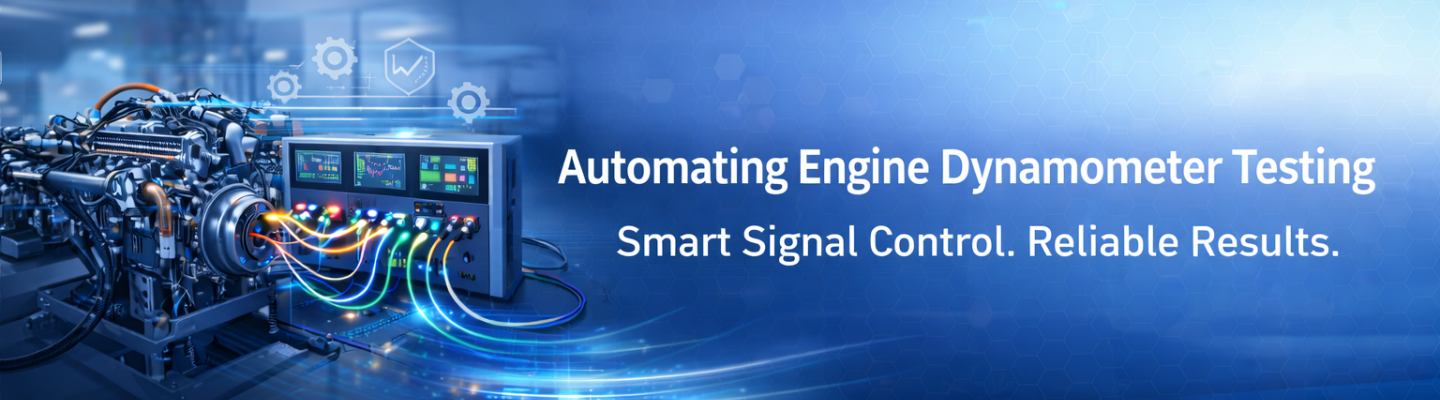
Cutting Test Time, Boosting Accuracy: Automated Engine Dyno Testing
Overview
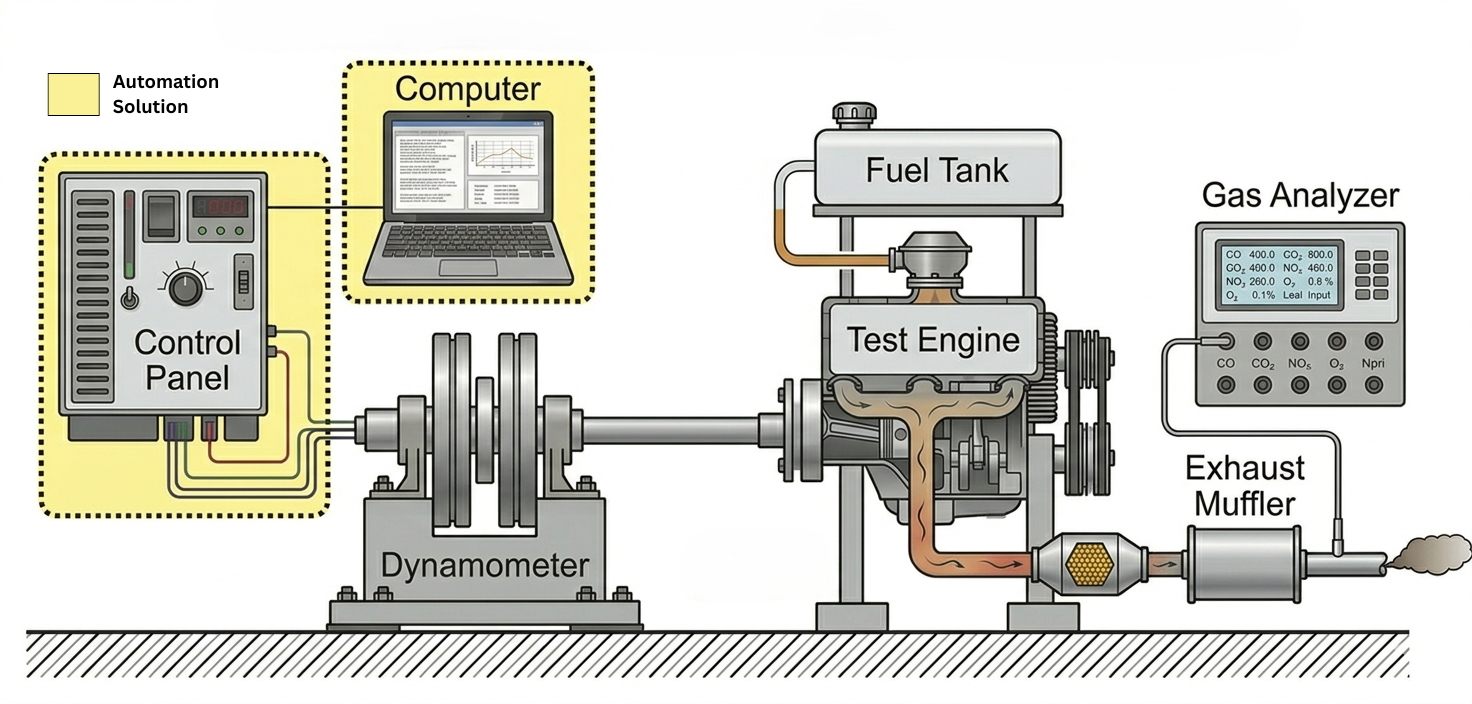
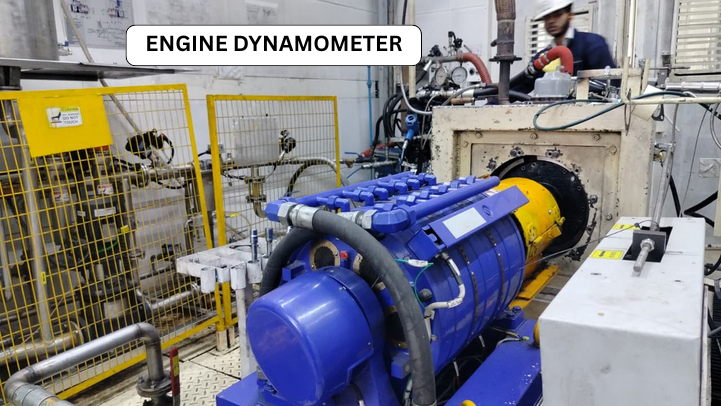
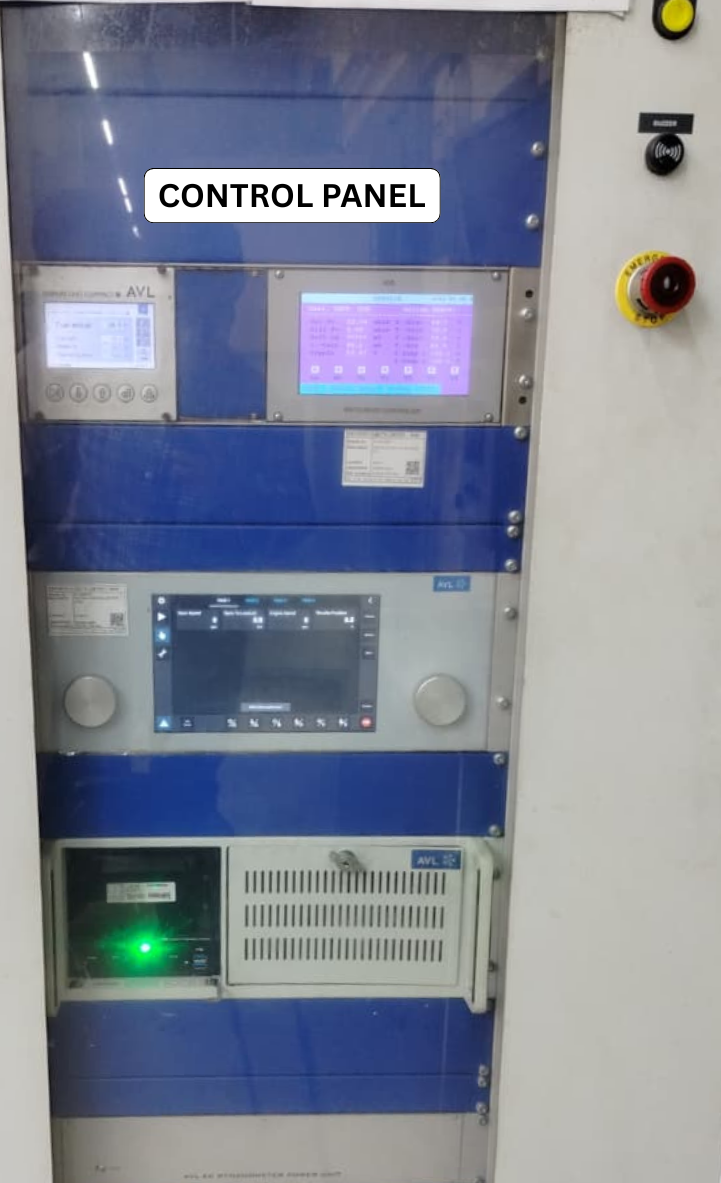
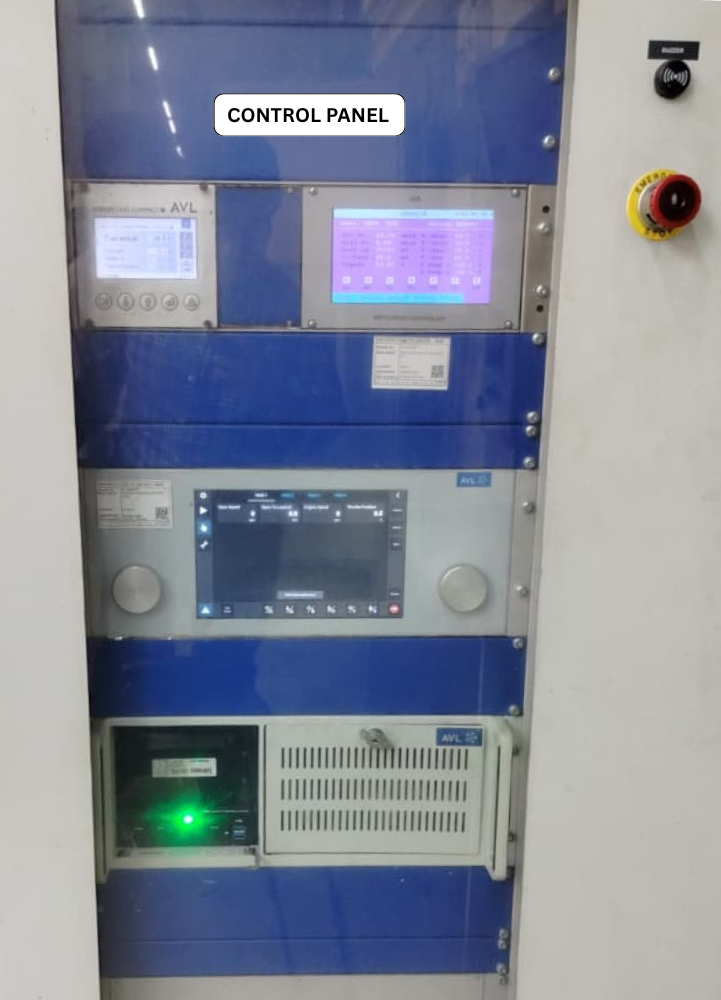
Mandala Solutions implemented an automated Digital I/O (DIO) to EDAC integration to modernize an engine dynamometer testing setup that previously relied on extensive manual signal switching. The new system eliminated operator dependency, improved signal reliability and introduced automated logic-based switching without requiring any internal hardware modifications.
Challenges
The existing testing setup required operators to manually switch signals multiple times during coolant checks, warm-up cycles and various test conditions.
- High dependence on manual intervention.
- Increased risk of human errors.
- Inconsistent test outcomes between operators.
- Slow troubleshooting due to unstructured wiring.
- Limited ability to expand the system.
Solution
Mandala Solutions deployed an automated DIO-to-EDAC signal switching architecture that integrates directly with external EDAC ports without modifying the internal system hardware.
Key elements of the solution included:
- Automatic signal switching based on EDAC operating limits.
- Electrical isolation to eliminate signal noise.
- Plug-and-play architecture using external connections.
- Reserved spare channels for future expansion.
- Structured wiring diagrams and documentation.
Implementation
The integration involved connecting the Digital I/O module directly to EDAC ports while configuring automated switching logic aligned with the testing workflow.
Key implementation steps included:
- External DIO integration with EDAC ports.
- Automated signal sequencing aligned with test cycles.
- Noise-isolated wiring architecture.
- Spare channels for future signals.
- Clear wiring diagrams and system documentation.
Benefits
The automated solution significantly improved operational reliability and test efficiency.
- Elimination of manual signal switching
- Reduced operator workload
- Consistent and repeatable test results
- Faster testing cycles
- Improved equipment safety
- Simplified troubleshooting and maintenance
Business Impact
By introducing automation into the testing environment, the organization achieved measurable improvements in operational performance.

Faster and more efficient testing cycles.

Improved test accuracy and product reliability.

Reduced downtime and troubleshooting effort.

Lower operational risks and errors.
Future-ready infrastructure for test expansion.
The upgrade strengthened overall testing capability while reducing operational complexity.